Designing Infrastructure for Modern Business Payouts
This case study explores how I designed a unified payout platform to reduce operational friction in high-volume business disbursements. By studying how finance teams initiate, approve, and track payouts, I translated fragmented manual workflows into a scalable system for managing digital payments.
Moving money is easy. Managing thousands of payouts reliably is the real challenge.
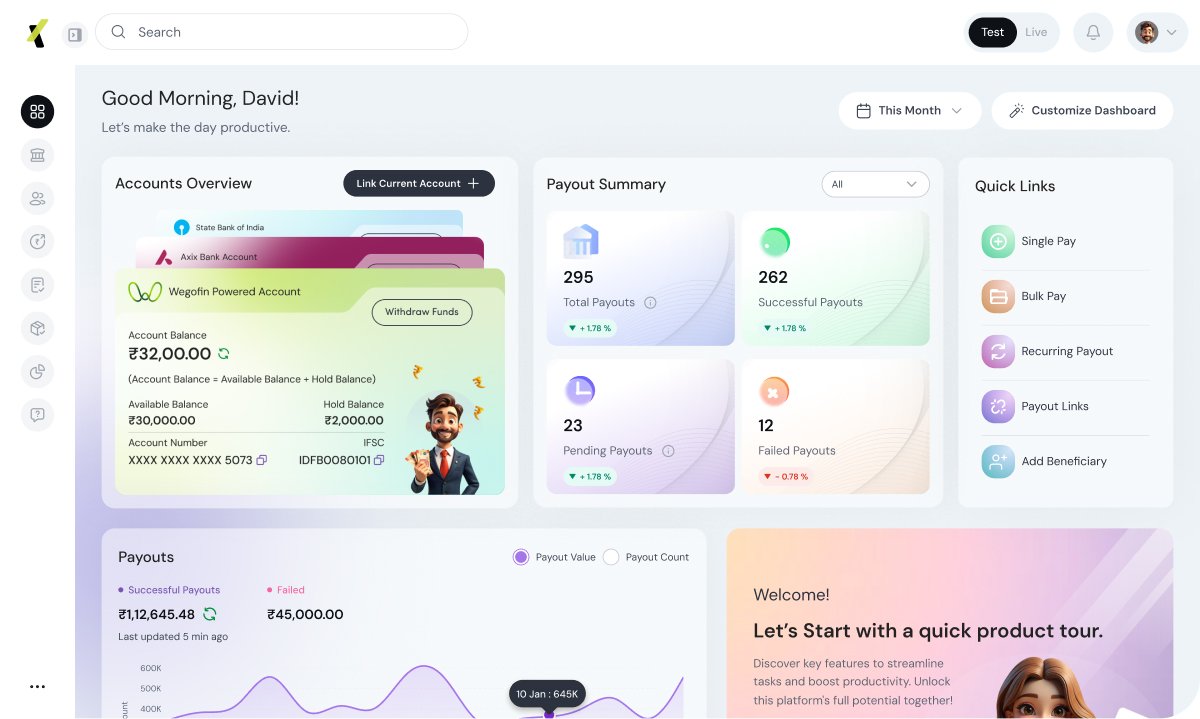
Beyond
Design Limits
While my title was UI/UX Designer, my role extended beyond interface design.
I collaborated closely with product managers and developers to shape the payout workflows, define the information architecture, and ensure the system addressed the operational needs of finance teams managing high volume transactions.
- • End-to-end UX design
- • Payout workflow design
- • Dashboard architecture
- • Product collaboration
- • 3 UI/UX Designer
- • 4 Developers
- • 1 Product Manager
- • Startup environment
- • Research & discovery
- • UX architecture
- • UI design & prototyping
- • Usability testing
- • User research
- • Information architecture
- • Interaction design
- • Design system
Making high volume payouts faster, clearer, and more reliable
Understanding the Payout Ecosystem
Before designing IssuerX, I needed to understand how payouts actually function beyond the interface. While payment rails like IMPS, NEFT, RTGS, and UPI enable fast transfers, the operational systems managing these transactions are often fragmented and manual.
The goal here was not to design screens, but to map how money flows across systems, users, workflows and where that flow breaks down.
Payouts are not single transactions, but structured workflows.
Each step depends on the previous one, making the system sensitive to failures.
A payout involves three key steps: add funds, create beneficiary, and execute transfer.
Each stage introduces dependencies that directly impact success and reliability.
Different payout types (IMPS, NEFT, RTGS, UPI) serve different use cases.
Speed, limits, and processing behavior vary across each rail.
The ecosystem runs on multiple banking rails working independently.
This fragmentation increases operational complexity and reduces visibility.
Bank integrations enable fund movement and validation.
Inconsistencies across banks create failures, delays, and dependency risks.
Beneficiaries define the destination of funds.
Errors in details or validation lead to failed or delayed payouts.
The Missing Middle in Financial Operations
While India's payout infrastructure is highly advanced with IMPS, NEFT, RTGS, and UPI enabling fast and reliable fund transfers, the operational layer built on top of these rails tells a different story.
Through early exploration and discussions with stakeholders, a clear pattern emerged. Teams handling high-volume payouts were not limited by infrastructure, they were limited by the systems available to operate it.
Who Operates in This Missing Middle
These users sit between enterprise-grade infrastructure and consumer-grade simplicity, yet are served well by neither.
High Volume, Low Digitization
Cooperative banks form a significant part of India's banking ecosystem, managing deposits and transactions for a large base of customers. Despite this scale, their operational infrastructure remains largely fragmented.
- Payouts are often initiated through manual processes or legacy systems
- Limited support for bulk operations and automation
- Heavy reliance on branch-level workflows and approvals
Execution depends on outdated systems despite modern infrastructure.
Product Opportunity
This created an opportunity to move from fragmented workflows to a unified system for managing payouts end-to-end.
The focus shifted from executing transactions to making payout operations reliable, visible, and scalable.

Reduce dependency on manual workflows

Increase visibility across the payout lifecycle

Enable scale without increasing operational complexity
When Systems Don't Scale, Operations Break
While payout infrastructure in India enables fast and reliable fund transfers, the operational reality of managing payouts is far more complex.
Payouts are not single actions but multi-step workflows, fund allocation, beneficiary setup, approvals, and execution often handled across disconnected tools.
As volumes grow, these workflows break down. Manual processes slow execution, errors increase, and visibility into transactions becomes difficult.
Before designing a solution, I needed to validate whether these were isolated issues or part of a systemic gap.
Validation
To validate whether these gaps were isolated or systemic, I analyzed real payout workflows, observed bulk transaction handling, and reviewed failure points across the process.
I also evaluated existing payout solutions to understand how these challenges were being addressed.
A consistent pattern emerged.
Problem
Payout operations depended on manual workflows, relying on spreadsheets, repeated data entry, and multiple tools to manage transactions.
The system was fragmented. Users had to move between banking interfaces, internal tools, and files to complete a single payout, leading to delays and errors.
Critical steps such as beneficiary creation and bulk uploads had high failure rates due to validation issues and incorrect data formats.
Once initiated, payouts lacked clear visibility, forcing teams to manually track status and handle follow-ups.
System Patterns
Existing solutions revealed the same gap from a different angle.
Some platforms offered strong automation but were complex and difficult to adopt. Others were simple to use but lacked flexibility, visibility, and support for bulk operations.
Across all workflows, three roles consistently interacted with the system:
1. Initiators
2. Approvers
3. Viewers
Despite different responsibilities, all depended on the same fragmented process.
Key Insight
As payout volumes increased, these inefficiencies didn't just persist, they amplified.
What worked at smaller scale began to fail:
1. Delays became frequent
2. Errors increased
3. Confidence in the system dropped
The core issue wasn't transaction speed, but the absence of a system to manage payouts reliably at scale.
Designing a System for Scalable Payout Operations
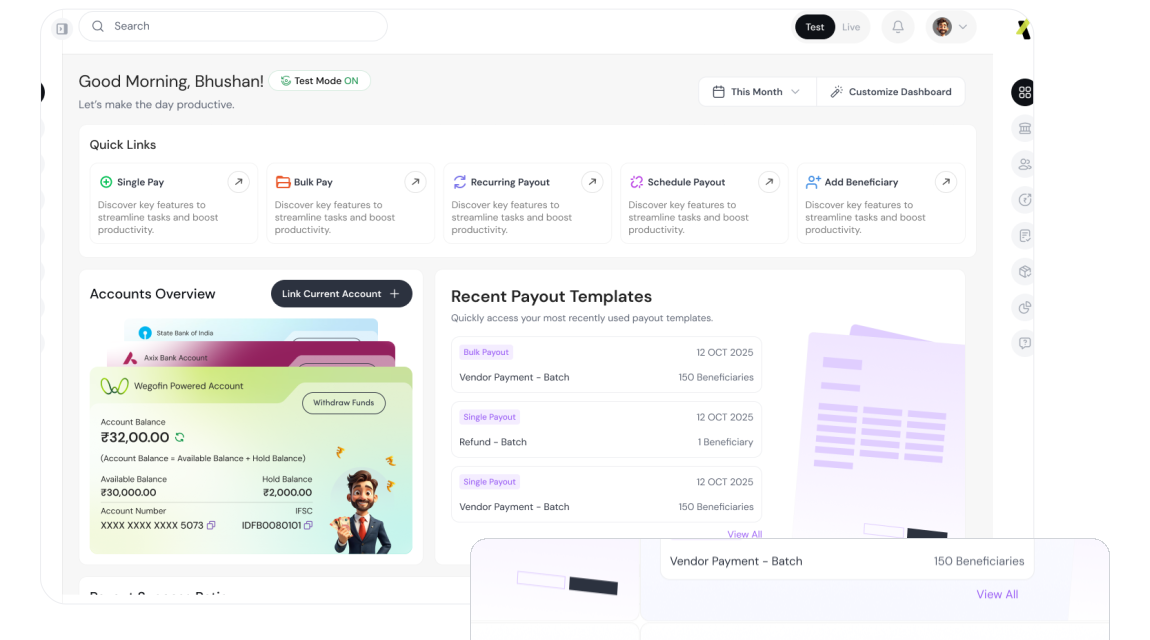
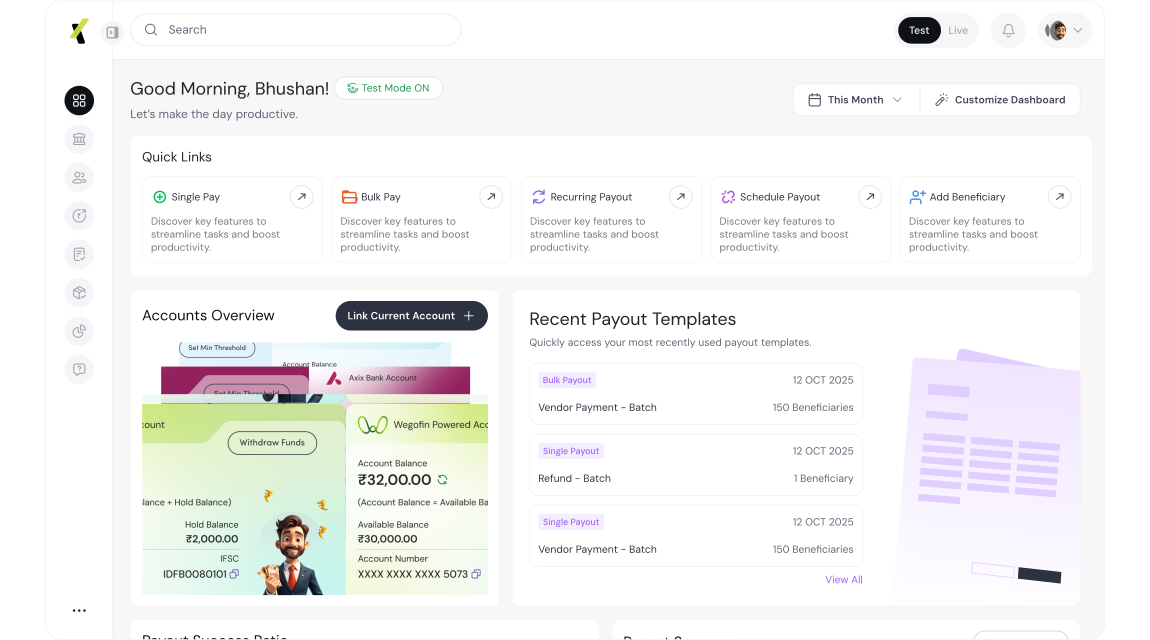
Instead of optimizing individual steps, the focus was to redesign how payouts are managed end-to-end.
The approach was to build a structured system that reduces manual effort, improves visibility, and supports scale without increasing operational complexity.
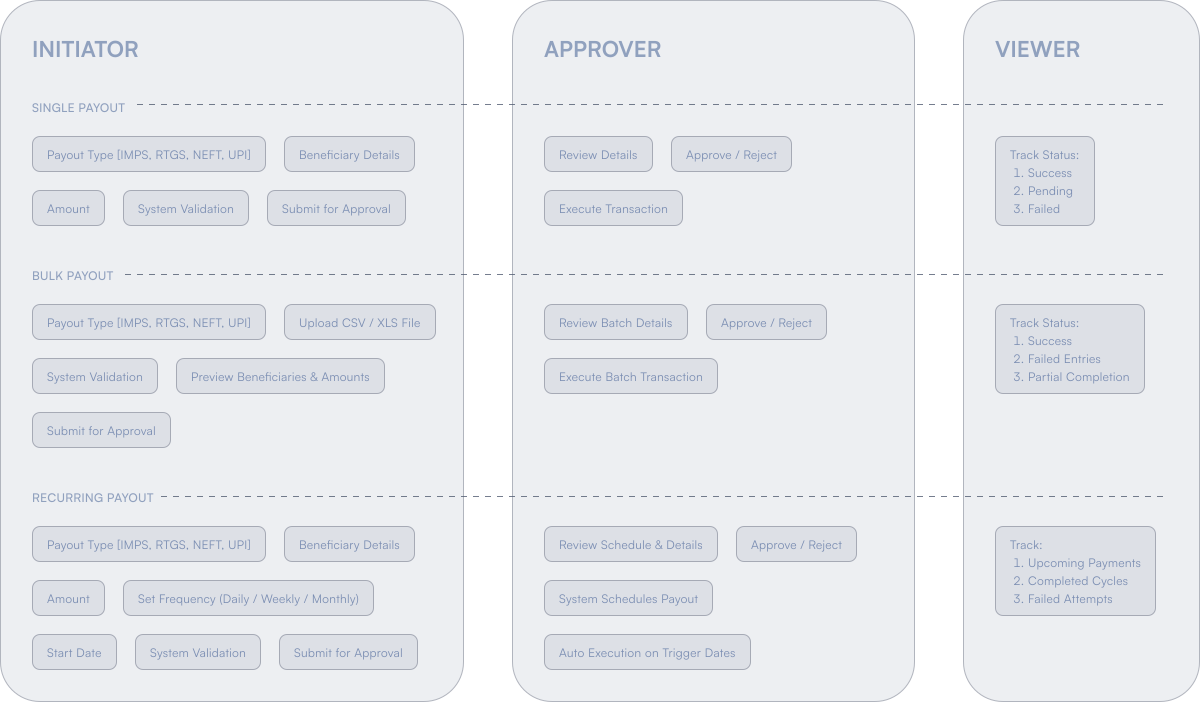
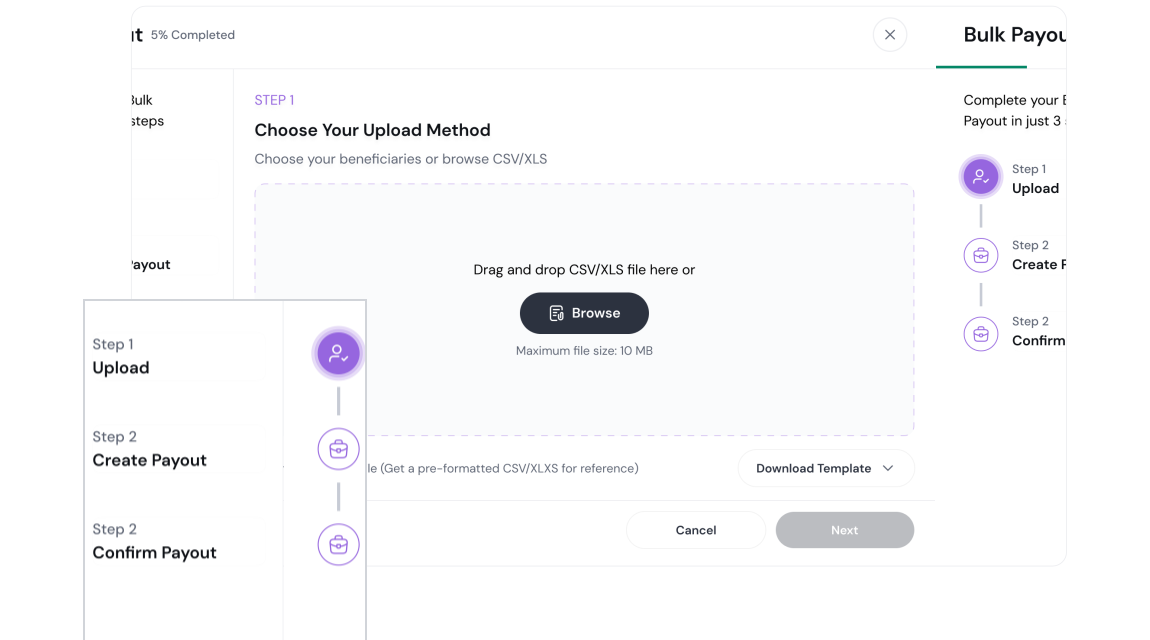
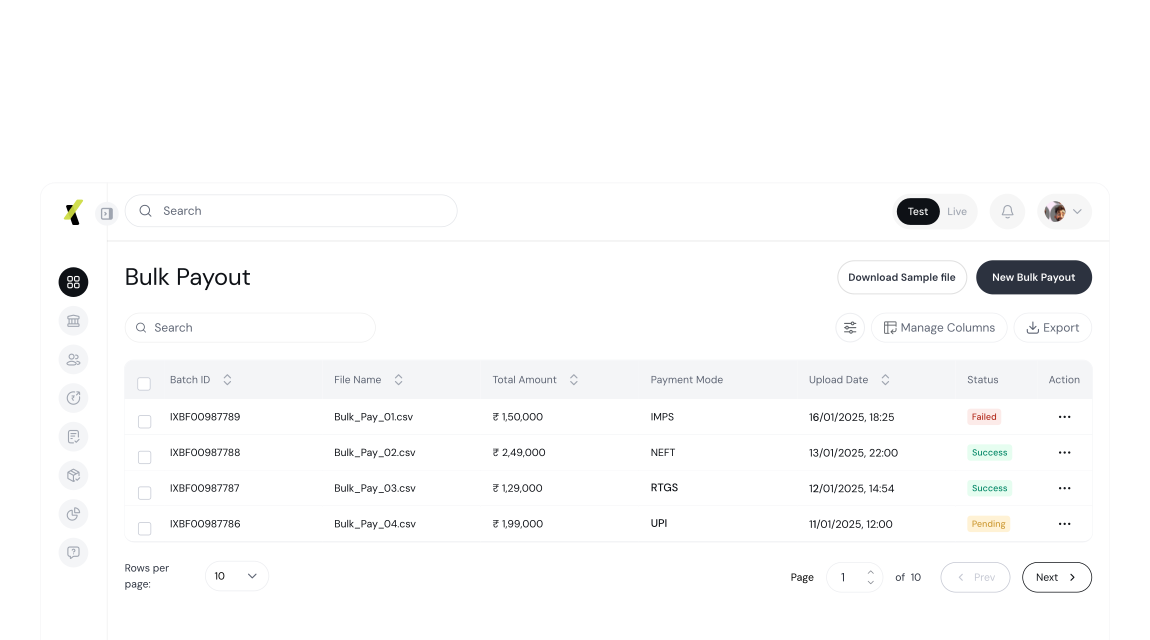
Simplifying workflows, aligning the system with real user roles, and introducing guidance at critical points where users previously struggled.
Measurable Improvements Across the Payout Lifecycle
The design focused on reducing operational friction across the payout lifecycle. Post-implementation, improvements were observed in efficiency, error reduction, and overall system clarity.

Faster Payout Completion
Reduced average completion time from ~6 minutes to ~3.5 minutes by simplifying workflows and minimizing unnecessary steps.

Reduced Bulk Upload Failures
Inline validations, guided uploads, and contextual feedback significantly reduced failed transactions and repeated retries.

Improved Discoverability & Lower Cognitive Load
Action-driven dashboard and guided flows helped users quickly understand where to start and how to proceed.

Operational Confidence
Clear status tracking, structured flows, and reduced ambiguity minimized dependency on manual follow-ups.
The biggest shift was not just in speed, but in transforming payouts from fragmented actions into a structured, reliable system.
Lessons from Building a Scalable System
This project highlighted that solving operational problems requires more than improving interfaces. It demands a deep understanding of systems, workflows, and the people navigating them daily.
- Designing for payouts was not about individual screens, but about how multiple steps connect and behave as a system.
- Small gaps between steps had a larger impact than any single UI improvement.
- Most failures were not caused by lack of capability, but by lack of clarity.
- Guiding users at the right moment proved more effective than adding restrictions or complex validations.
- Workflows that function well at low volume often break under scale.
- Designing for edge cases, bulk actions, and failure handling became critical for reliability.
- Initiators, approvers, and viewers interact with the same system differently.
- Designing without aligning these roles creates bottlenecks, even if individual experiences are optimized.
- Users were more confident when they could see what was happening, even during failures.
- Transparent status, clear feedback, and traceability were as important as successful execution.
This project shifted my approach from designing isolated features to thinking in systems, where reliability, clarity, and scalability define the overall experience.
Let's Build
Something Impactful
Have a product challenge or a bold idea? Let's create something that works beautifully and drives real results.
Currently open to full-time product design opportunities
Discuss an Opportunity